Hospitals need furniture that supports hygiene, durability, and daily clinical movement. This is why buyers often ask, “Why do hospitals prefer seamless furniture designs?” The answer begins with fewer places for dust, moisture, and microorganisms to collect. Smooth surfaces are easier to wipe between patients. Sealed edges also reduce damage from repeated cleaning.
Roger Ulrich, a leading healthcare design researcher, has stated, “A well-designed healthcare environment can reduce stress and support healing.” His work reminds sourcing teams that furniture affects more than appearance. A chair beside an infusion bay should feel stable, clean, and easy to move. A bedside cabinet should resist harsh cleaning agents without becoming brittle. These details matter during long shifts.
Sourcing seamless furniture requires careful verification. Review upholstery specifications, welded joints, rounded corners, fire performance, chemical resistance, and cleaning instructions. Ask manufacturers for test reports and material samples. Request a physical mock-up when possible. Digital images can hide weak edges.
No product is perfect. “Seamless” may describe one panel, not the entire construction. Some designs still contain hidden gaps beneath hardware or removable parts. That deserves closer inspection. Hospital procurement teams should compare lifecycle cost, warranty terms, repair access, and infection-control requirements. They should also consult nurses, environmental-service staff, infection-prevention specialists, and facilities managers. Their daily experience often reveals problems that brochures miss.
A reliable supplier explains limitations clearly. That transparency builds trust. The right furniture should simplify cleaning without sacrificing comfort, safety, or practical maintenance.
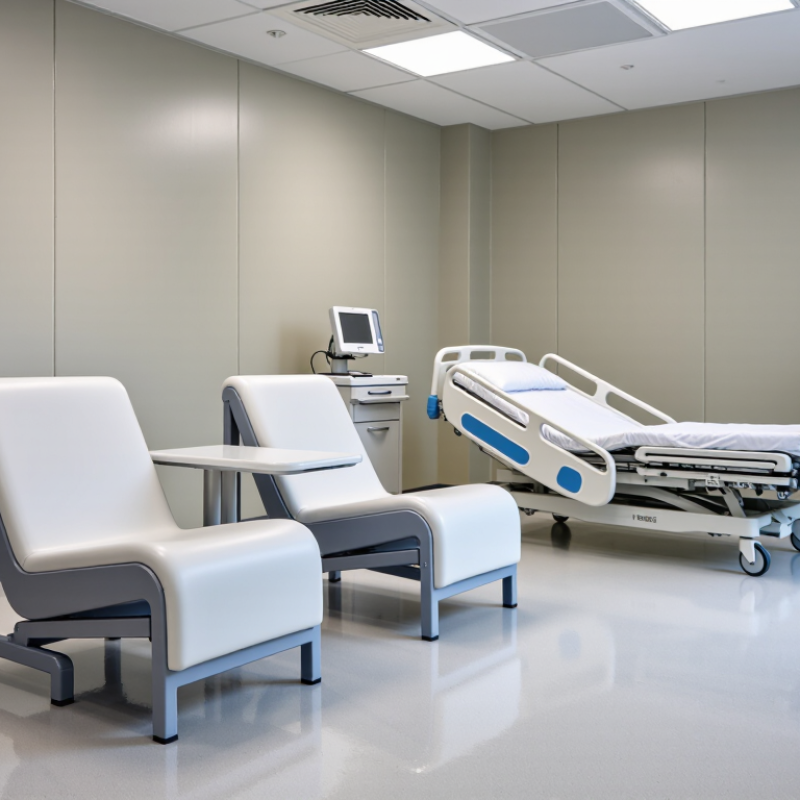
Sourcing seamless furniture for hospitals begins with precise requirements, not attractive product images. Define each room’s function, user group, cleaning frequency, equipment load, and available clearance. A nurses’ station needs cable management and rounded corners. A patient room needs durable storage, easy access, and quiet operation. Procurement teams should record dimensions, weight limits, moisture exposure, and replacement expectations before requesting quotations.
Seamless design standards must support infection prevention and daily maintenance. Specify flush-mounted panels, sealed edges, welded joints, and nonporous surfaces where appropriate. Avoid deep grooves, exposed fasteners, and decorative gaps that collect dust. Continuous coved transitions can simplify cleaning around fixed cabinets. Surfaces should tolerate approved disinfectants without swelling, discoloration, or cracking. Confirm slip resistance, fire performance, accessibility, and local healthcare requirements with qualified professionals.
Details matter. A drawer handle should remain usable with gloved hands. A 3-millimeter gap can become a cleaning problem. Mock-ups help teams test reach, noise, visibility, and workflow before full production. Request material samples, cleaning-test records, load data, installation drawings, and maintenance instructions. Seamless does not mean completely joint-free; every assembly still needs controlled access for repairs. This distinction is easy to overlook. A design that looks perfect may be difficult to service, so review both hygiene performance and long-term practicality.
Define hospital furniture requirements and verify measurable accessibility dimensions before approving seamless, easy-to-clean designs.
Reference dimensions are based on commonly used ADA accessibility criteria: 815 mm minimum clear door opening, 915 mm minimum accessible route width, 1,220 mm maximum forward reach, 1,525 mm wheelchair turning diameter, and 430–485 mm accessible seat height. Seamless furniture should also use sealed joints, non-porous surfaces, rounded edges, and finishes compatible with the hospital’s approved cleaning and disinfecting protocols.
Identify qualified manufacturers before comparing prices. A suitable supplier should understand infection control, patient safety, and daily cleaning routines. Look for sealed surfaces, welded joints, rounded edges, and minimal dirt traps. These details matter around bed bays, treatment rooms, and nursing stations.
Ask manufacturers for factory audit records, material declarations, and recent test reports. Verify resistance to hospital disinfectants, moisture, impact, fire, and repeated cleaning. Powered furniture may require additional electrical safety documentation.
Check the details. A certificate alone does not prove production consistency. Request samples from the same process used for full-scale orders.
Inspect corners, drawer runners, seams, coatings, and underside panels under bright light.
Use independent laboratories where possible, and confirm reports match the exact model and materials. Review quality controls, batch traceability, inspection records, and change-control procedures. Speak with the manufacturer’s technical team, not only a sales representative. Ask how defects are isolated and corrected. Ask for evidence.
A small pilot installation can reveal problems that drawings hide, such as noisy casters or difficult-to-clean gaps. Perfect specifications are not enough. Real hospital staff may find a handle awkward or a surface too reflective. Their feedback should influence the final selection.
Keep written acceptance criteria for hygiene, durability, dimensions, and delivery quality.
Hospital furniture must support clinical work, not merely look clean. During site evaluations, I check every joint, edge, and underside. Open seams can trap dust, moisture, and microorganisms. Choose sealed surfaces with rounded corners and minimal crevices. Non-porous materials are easier to wipe between patients. However, “seamless” should not mean unrepairable. Damaged panels still need practical replacement.
Construction quality deserves close attention. Inspect welds, fasteners, drawer movement, and load-bearing points. A chair may appear strong but loosen after constant transfer use. Request material specifications, cleaning compatibility data, and independent test reports. Verify resistance to disinfectants used in the hospital. Some finishes fade, crack, or become sticky after repeated chemical exposure. That detail is often missed.
Tips Bring a sample to the ward. Test it beside a sink. Wipe it repeatedly. Check drying time, odor, and surface changes. Ask cleaning staff to review the design. Their experience is valuable. Also assess patient safety. Furniture should resist tipping, sharp edges, pinch points, and unstable movement. Infection control is not only a material choice. It depends on cleaning access, staff habits, and maintenance planning. A perfect specification can fail in a crowded room.
Sourcing seamless furniture for hospitals begins with customization, not appearance alone. Specify welded joints, coved edges, sealed surfaces, and concealed fixings. These details reduce dust traps around nurses’ stations and patient rooms. Ask whether dimensions can follow wall drawings without creating awkward service gaps. A supplier should provide shop drawings, material samples, load data, and cleaning guidance before approval. In practice, one overlooked cable route can force expensive revisions. That happened in a refurbishment I reviewed. The lesson was uncomfortable but useful.
Lead times need more than a calendar promise. Request separate dates for design approval, sampling, production, inspection, packing, and delivery. Confirm which components are made locally and which depend on imported hardware. Hospitals may need phased installation during night shifts or ward closures. Suppliers should explain their capacity, overtime limits, backup production sites, and installation teams. Ask for evidence from comparable healthcare projects, not polished claims. A realistic schedule includes buffer time. Rarely optional.
Pricing should be compared on a like-for-like schedule. Include furniture, drawings, testing, delivery, installation, replacement parts, and future adjustments. The lowest quotation may exclude coordination or fire-rated materials. A higher price can be justified when tolerances are tighter and documentation is complete. Still, “premium” is not proof of quality. Review warranty terms, response times, quality records, and corrective-action procedures. I would also test one pilot room before releasing the full order. It may slow procurement. It can expose poor sealing, uneven doors, or cleaning damage early. That small hesitation often protects the larger budget.
Sourcing seamless furniture for hospitals begins with physical samples, not attractive renderings. Request a full-size door, worktop corner, joint, and hardware set. Examine transitions under bright, angled light. A visible ridge can trap dust and weaken cleaning performance. Ask staff to test the surface with gloves. Does it open easily? Does disinfectant leave a film? Record dimensions, finish codes, and cleaning instructions beside each sample. Small details matter.
Before approval, confirm installation conditions with the contractor and hospital facilities team. Check wall backing, floor levels, service points, access clearances, and fixing methods. Request coordinated drawings showing every outlet, sink connection, cable route, and removable panel. Confirm who seals penetrations and protects finished surfaces. A cabinet may fit the room but block equipment movement. That happened on one project. We corrected it, but late changes cost time and trust. Recheck site measurements after flooring and wall protection are installed.
Manage final delivery as a controlled handover. Use a numbered packing list, delivery photos, moisture protection, and a room-by-room schedule. Inspect crates before unloading. Photograph dents, wet packaging, missing components, and incorrect finishes immediately. Keep hardware with its assigned unit. Installation teams need clear access and a clean staging area. Allow time for final alignment, door-gap checks, sealant inspection, and cleaning verification. Do not assume the first inspection is enough. A rushed sign-off can hide problems that appear after daily use.
Record each room’s function, users, cleaning frequency, equipment load, available clearance, and replacement expectations. Dimensions matter.
Specify flush-mounted panels, sealed edges, welded joints, and suitable nonporous surfaces. Avoid deep grooves, exposed fasteners, and decorative gaps.
Nurses’ stations need cable management and rounded corners. Patient rooms need durable storage, easy access, and quiet operation.
Mock-ups test reach, noise, visibility, cleaning access, and workflow. A small trial can reveal awkward doors or blocked cables.
Request shop drawings, material samples, load data, cleaning-test records, installation drawings, and maintenance instructions. Do not rely on attractive images alone.
Request separate dates for design approval, sampling, production, inspection, packing, delivery, and installation. Include realistic buffer time.
Compare furniture, drawings, testing, delivery, installation, replacement parts, and future adjustments. The lowest price may omit important coordination work.
No. Assemblies still need controlled access for repairs. A perfect-looking surface may become difficult to service later.
One pilot room can expose poor sealing, uneven doors, or cleaning damage. It may slow procurement, but that delay can protect the budget.
Sourcing seamless furniture for hospitals begins with clearly defining functional requirements, room conditions, cleaning routines, durability expectations, and applicable healthcare standards. Why do hospitals prefer seamless furniture designs? Fewer joints, gaps, and exposed edges can help reduce areas where dust and contaminants accumulate, while also making surfaces easier to clean and maintain. Buyers should identify qualified manufacturers, verify relevant healthcare compliance, and assess their experience with demanding clinical environments.
A thorough evaluation should cover material performance, construction strength, stability, fire and chemical resistance, patient safety, and infection-control considerations. Hospitals should also compare customization options, production lead times, pricing transparency, warranties, and installation capabilities. Before placing a final order, inspecting samples can confirm comfort, finish quality, dimensions, and cleanability. Detailed installation plans, delivery schedules, packaging requirements, and acceptance procedures should be agreed upon in advance. Careful supplier management helps ensure that the selected furniture meets operational needs, supports hygienic care environments, and performs reliably over its service life.

Ramsey Furniture