Ramsey Furniture





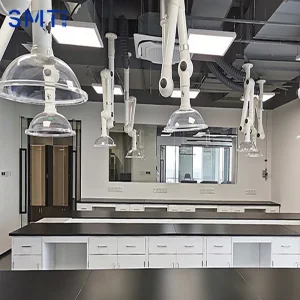

Deep Dive: The Engineering Behind a High-Quality Clean Room Workbench
As a leading China Clean Room Workbench manufacturer, we understand that the difference between success and failure in a clean environment lies in the details of the laminar flow. A clean room workbench (also known as a laminar flow cabinet) creates a particle-free working environment by taking air through a filtration system and exhausting it across a work surface in a laminar or unidirectional air stream.
Vertical vs. Horizontal Flow: Which is Right for You?
One of the most common procurement questions we receive is the choice between vertical and horizontal airflow. Vertical Flow Workbenches are ideal for applications where floor space is limited and where large equipment might be placed on the bench, as the air moves downwards. Horizontal Flow Workbenches are preferred for applications requiring the cleanest air possible at the work surface, as the air travels from the back filter directly towards the operator.
Advanced Material Selection
We utilize cold-rolled steel with epoxy powder coating or full 304/316L stainless steel for our structures. This ensures that our workbenches can withstand rigorous cleaning protocols with harsh chemicals without corroding. The work surfaces are often made of reinforced physical and chemical boards or stainless steel with a mirror finish to minimize particle accumulation.
The Role of SMT Technology
In the context of SMT (Surface Mount Technology), a clean room workbench is vital for preventing solder paste contamination and ensuring the integrity of fine-pitch components. Our workbenches often integrate with SMT lines, providing a localized Class 100 environment within a larger Class 10,000 factory, significantly reducing energy costs for the facility owner.